


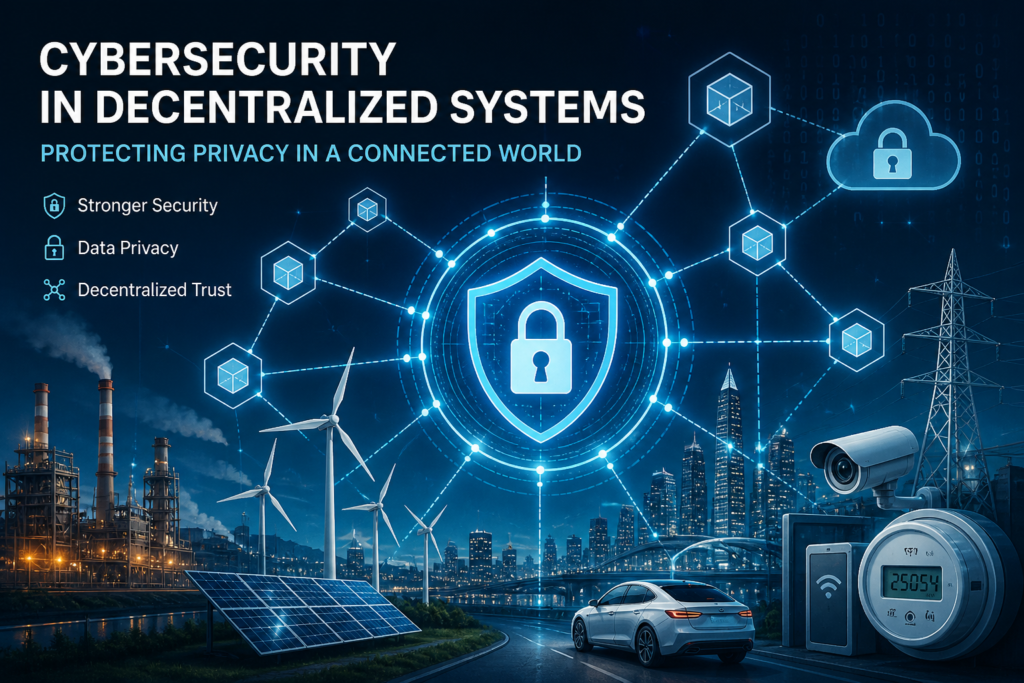
As more devices and systems become connected, security is no longer just an IT issue—it’s part of everyday life. From smart homes to industrial automation, decentralized systems and cyber-physical systems (CPS) are transforming how we live and work. But with this shift comes a new set of cybersecurity and privacy challenges that can’t be ignored.
What Are Decentralized and Cyber-Physical Systems?
Decentralized systems operate without a central authority, relying instead on distributed networks. Common examples include blockchain platforms and peer-to-peer networks.
Cyber-physical systems, on the other hand, combine physical processes with digital control. Think of smart grids, autonomous vehicles, or healthcare monitoring devices. These systems interact directly with the real world, which makes security even more critical.
Why Security and Privacy Matter
In traditional systems, security is often managed centrally. But in decentralized environments, there’s no single point of control, which makes enforcing security more complex.
Some common risks include:
- Unauthorized access to sensitive data
- Data tampering during transmission
- Device spoofing or identity attacks
- System disruption that can affect real-world operations
Privacy is another major concern. Many CPS applications collect continuous data, including personal or operational information. Without proper safeguards, this data can be misused or exposed.
Key Challenges in Cybersecurity
One of the biggest challenges is balancing security with system performance. Many CPS devices are resource-constrained, meaning they can’t support heavy security mechanisms.
Another issue is trust. In decentralized systems, how do you verify that data or devices are legitimate without relying on a central authority?
Scalability also plays a role. As networks grow, security solutions must remain effective without slowing everything down.
Emerging Solutions
Several approaches are being explored to address these challenges:
- Blockchain-based security: Helps ensure data integrity and transparency without central control
- Lightweight encryption: Designed for devices with limited computing power
- Intrusion detection systems: Use machine learning to identify unusual behavior in real time
- Zero-trust architectures: Assume no device or user is automatically trusted
These solutions aim to create systems that are both secure and efficient.
Real-World Applications
In smart grids, cybersecurity ensures stable energy distribution and prevents attacks on infrastructure.
>In healthcare, it protects sensitive patient data from breaches.
>In transportation, it helps secure autonomous vehicles from malicious interference.
Conclusion
As decentralized and cyber-physical systems continue to grow, cybersecurity must evolve alongside them. Protecting these systems isn’t just about preventing data breaches—it’s about ensuring safety, reliability, and trust in the technologies we depend on every day.The future will likely combine multiple security approaches, creating smarter and more adaptive defenses for an increasingly connected world.
Leave a Reply Cancel reply